





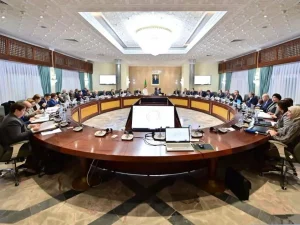
Meeting on Sunday in the Egyptian capital, the Executive Committee of the Confederation of African Football (CAF) experienced a turbulent session marked by major institutional developments. The body formally accepted the abrupt resignation of its Secretary General, Véron Mosengo-Omba, while simultaneously unveiling sweeping reforms to refereeing structures and announcing a reconciliation mission between Senegal and Morocco following the incidents that marred the 2025 Africa Cup of Nations (AFCON) final.
Pressure had been mounting for months on Mosengo-Omba, intensifying in the wake of the controversial decision to withdraw hosting rights for the AFCON from Senegal in favor of Morocco. Facing sustained criticism, he confirmed his departure in a statement released on social media on the sidelines of the Executive Committee meeting. After more than three decades in international professional football, he stated that he had chosen to step down in order to focus on personal projects, emphasizing his long-standing commitment to a sport capable of uniting, educating, and creating opportunities.
Pending the appointment of a successor at the next General Assembly, CAF’s Director of Competitions, Nigerian official Samson Adamu, will serve as interim Secretary General.
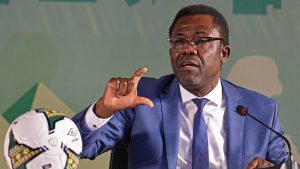
Moments after the resignation was formalized, CAF President Patrice Motsepe addressed the press, outlining a broad structural reform agenda aimed at restoring confidence in officiating. The refereeing controversies that overshadowed the AFCON Morocco 2025 final—currently under review by the Court of Arbitration for Sport—appear to have left a lasting impact on the organization’s leadership. Motsepe announced that CAF is implementing significant reforms to strengthen trust in referees, VAR operators, match commissioners, and judicial bodies, pledging that the “unacceptable incidents” witnessed during the tournament would not be repeated.
Regarding the ongoing legal proceedings, Motsepe adopted a measured tone, affirming that he would respect and implement the ruling of the Court of Arbitration for Sport. He also confirmed upcoming visits to both Senegal and Morocco as part of efforts to ease tensions, stressing that football must not be allowed to divide nations or fuel discord.
In addition to these measures, CAF revealed a change in the format of its flagship competition. Beginning with the 2028 edition, the Africa Cup of Nations will revert to a four-year cycle and expand to include 28 teams, up from the current 24, marking a significant evolution in the tournament’s structure.



+ There are no comments
Add yours