
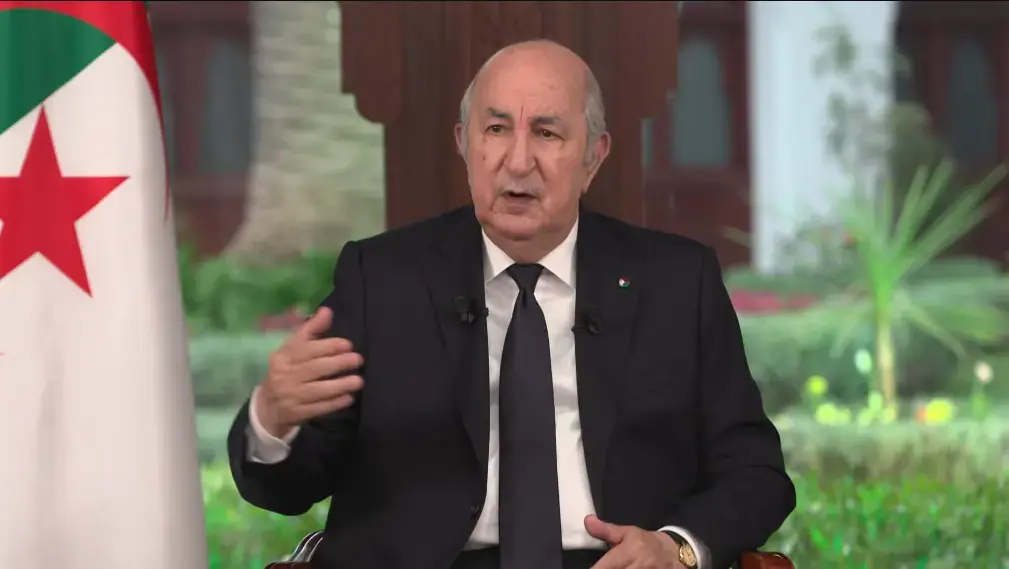
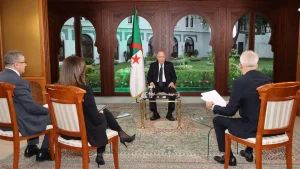
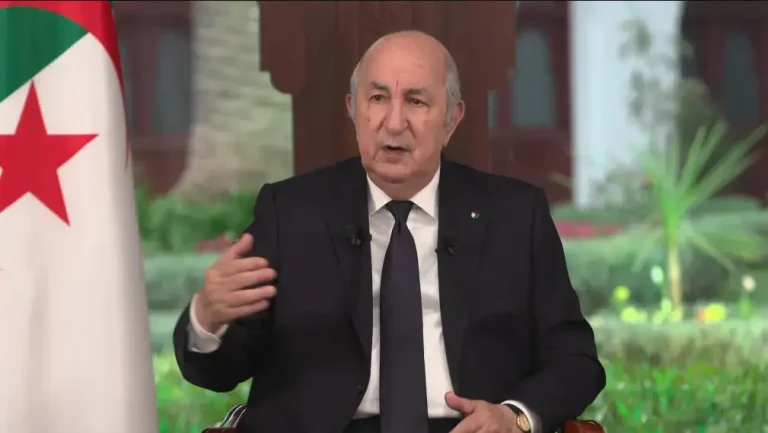
In a lengthy interview granted to national media and broadcast on Saturday evening, the President of the Republic, Abdelmadjid Tebboune, painted an ambitious picture of the country’s economic transformation, placing industrial diversification and national independence at the core of his political vision.
The head of state stressed that “the competitiveness demonstrated by several national industrial sectors in recent years has helped give strong momentum to Algeria’s non-hydrocarbon exports.” According to him, this progress reflects a dramatic turnaround in the country’s economic situation. “Whereas Algeria used to import rebar just a few years ago, it is now an exporter,” he recalled, illustrating the ongoing transformation.
Algeria is now “more competitive than some European countries in areas such as household appliances,” President Tebboune asserted—an indication of the ambition to reposition the country on the regional and international industrial stage.
Automotive and Agribusiness Leading Diversification
The automotive sector is a key focus of government hopes. The Fiat Algeria plant “will reach a 40% integration rate with an export-oriented approach,” the president announced. The recent inauguration of a stamping plant in Batna province, which will produce car bodies and truck cabins, marks another step forward in upgrading national production.
“The honest private sector is making giant strides,” Abdelmadjid Tebboune said, an unusual acknowledgment of the role of private entrepreneurs in economic development. The agribusiness sector is also gaining ground: “Algerian agri-food products are now in high demand everywhere, whereas many of these products were previously imported,” he noted, adding that part of national production will be exported.
Phosphate: A Structuring Project for the Future
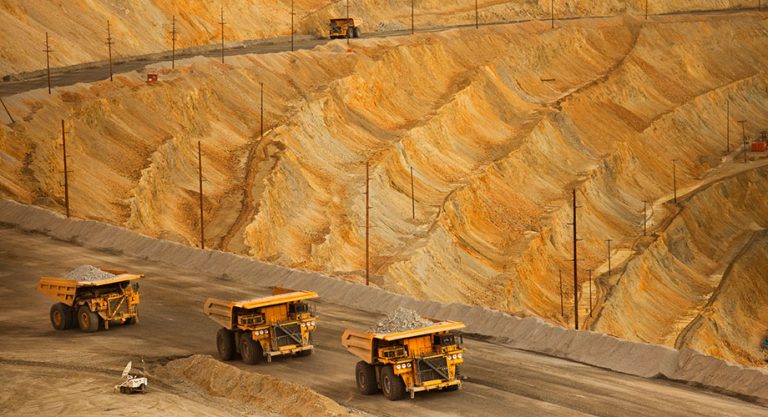
The president also highlighted progress on the integrated phosphate project in eastern Algeria, a major strategic investment. “Work is underway on the integrated phosphate project in Bled El-Hadba, where the phosphoric acid plant will come into operation by late 2026 or early 2027,” he said. The project aims at “exploiting phosphate at all stages” and is expected to generate “tens of thousands of jobs.”
Algeria is also rich in many other “countless” mines that will be exploited in the future, the head of state noted, justifying “the creation of a specialized ministry bringing together expertise and specialists to manage these resources.” Mining projects, along with railway lines toward the South, are part of a “national vision” and “not the result of chance,” he insisted, recalling that they were among his campaign commitments.
Economic Independence Closely Guarded
Beyond the announced successes, President Tebboune reaffirmed the core principles of his policy. “We strive to solve our problems ourselves because, in the past, no one stood by us when we faced hardships,” he said. “Today, we are able to address citizens’ concerns without compromising Algeria’s independence or its wealth, which belongs exclusively to the Algerian people.”
This doctrine of sovereignty goes hand in hand with vigilance against economic malpractice. The president warned against certain practices in export activities, particularly under-invoicing. Cases of non-repatriation of export revenues amounting to $350 million have recently been identified. “We got rid of the ‘issaba’ that engaged in over-invoicing only to face another ‘issaba’ involved in under-invoicing,” he lamented.
Regarding illegal commercial practices, the state “will not tolerate any harm to Algerians’ livelihoods,” he warned, adding that “anyone who speculates on Eid sheep will pay a heavy price.”
Elections and Democratic Consolidation
Ahead of the upcoming legislative elections on July 2, Abdelmadjid Tebboune assured that “all conditions are in place to guarantee the integrity of the electoral process.” “The term electoral fraud no longer exists and is no longer part of Algerians’ political vocabulary,” he stated, while warning that “any attempt to undermine the integrity of elections will face the law.”
In response to reports of vote-buying and political endorsements, the president warned that “any individual proven to be involved will face criminal prosecution, potentially leading to suspension, dismissal, withdrawal of confidence, and lifting of immunity through the Constitutional Court.” “The law is clear and will be applied to الجميع. No one is above the law,” he emphasized.
On freedom of expression, the president reaffirmed that it is guaranteed in Algeria “provided that the laws of the Republic, the components of national identity, and the traditions of society are respected,” and “provided that the expressed ideas are those of their authors and not dictated by other parties.” He criticized “the double standards of certain countries that claim to be models of democracy while imprisoning those who express support for the Palestinian cause on social media.”
The Pope’s Visit: A Diplomatic Success
The president described the visit of Pope Pope Leo XIV to Algeria as a “success,” viewing it as “an important step in strengthening relations between Algeria and the Vatican.” He proposed to the pontiff the opening of a Vatican embassy in Algeria, a proposal that was “favorably received.”
He said the visit “refuted the myth of the former colonial power claiming to have created Algeria,” highlighting that the Pope emphasized “Algeria’s historical roots dating back to Saint Augustine and even earlier.” It “places Algeria in its natural position,” that of “a reliable intermediary it has always been,” the president added, referring to its role in interfaith dialogue.
African Relations and Position on Mali
Regarding the situation in Mali, President Tebboune expressed regret: “We are saddened by what is happening in Mali.” He advised that “the path of reason is to engage in dialogue with its people,” while stressing that “Algeria has never interfered and will never interfere in the internal affairs of Mali or other countries.” “Algeria has always been a brotherly nation to Mali,” he insisted, noting that “the Algiers Agreements are a Malian matter, not an Algerian one.” A.B
On Algerian-American relations, the president stated that they “have always been good” and continue to improve, while reaffirming that Algeria will never abandon its allies such as Russia and China. He emphasized that Algeria remains a non-aligned country that rejects any foreign military bases on its territory.


thanks for this information