
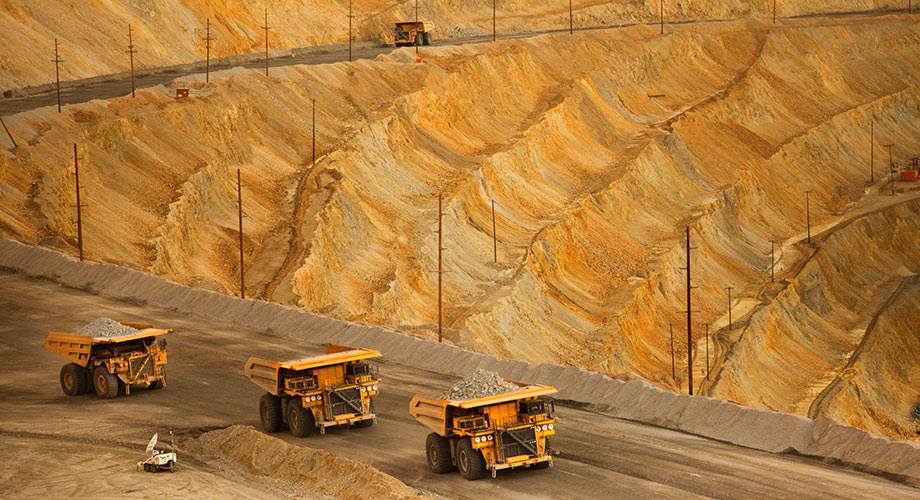
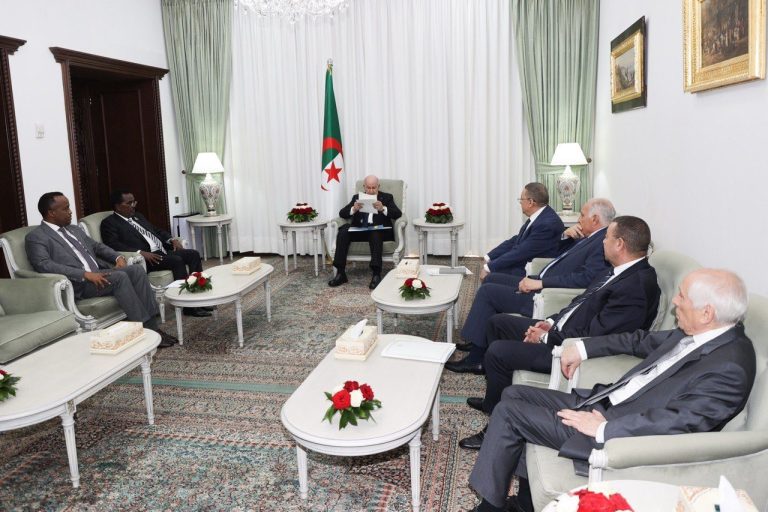
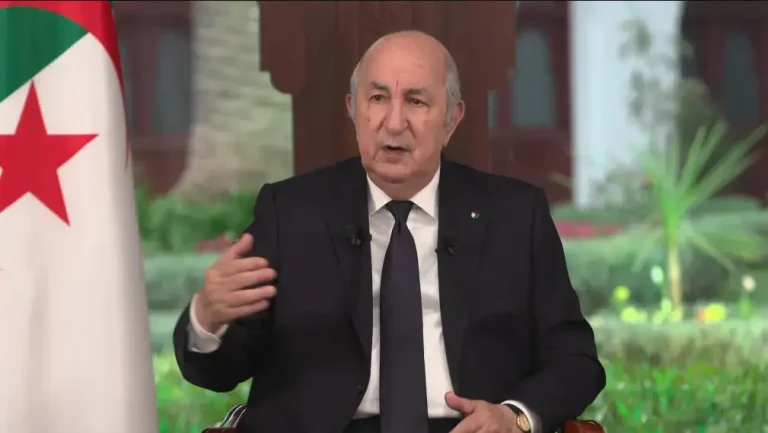
Some announcements sound like mere rhetoric, while others signal a real turning point. The one made by Abdelmadjid Tebboune during Sunday’s Council of Ministers clearly falls into the latter category. The president set a firm, non-negotiable deadline—almost provocative in its precision: the first exports of Algerian phosphate extracted from the Bled El-Hadba mine, in the wilaya of Tébessa, must leave the port of Annaba “no later than March 2027.” To avoid any ambiguity, he described the objective as an “absolute economic priority for the sector,” stressing in unequivocal terms that mining must become “a dynamic wealth-generating sector on the one hand, and a driver of a break from dependence on hydrocarbons on the other.” For experts closely following Algeria’s economic model, the message was unmistakable.
A Governance Model Undergoing Transformation
International economic development consultant Abderrahmane Hadef did not hide his satisfaction. For him, these presidential directives “reflect not only strong political will, but also the foundations of a profound transformation in the approach to economic governance, based on a shift from crisis and short-term management to a strategic governance system built on an integrated, long-term vision.” In other words, Algeria is no longer managing day-to-day crises—it is building something structured.
Algeria, he insists, “is now undergoing a transformation of its economic governance,” where the objective goes beyond short-term balance toward reshaping the economic model into one that is more diversified and sustainable. This new approach is based on the valorization of national resources, directing investment toward high value-added productive sectors, and embedding a culture of results and respect for deadlines as essential implementation criteria.
Economic expert Houari Tigharsi shares this view, seeing in the ambition to make mining “a pillar of an economic model based on production and job creation” the sign of a broader revival dynamic the country has long needed.
Bled El-Hadba: Far More Than Just a Mine
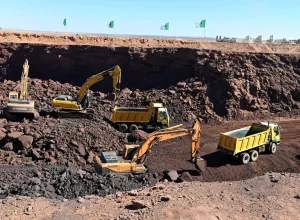
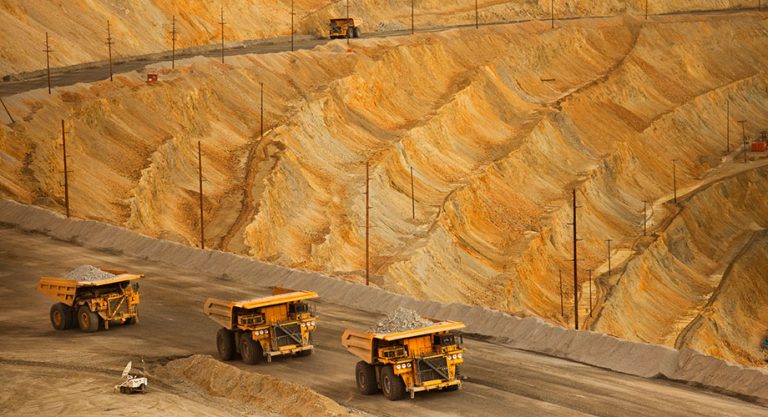
Behind the name lies a project of staggering scale: estimated reserves of 840 million tons—equivalent to around eighty years of operation at the planned pace—along with projected annual production of 10.5 million tons of raw phosphate and 6 million tons of fertilizers.
The project, jointly led by Sonarem for extraction and Sonatrach for chemical processing, aims to cover the entire value chain—from rock extracted in Tébessa to fertilizers exported from the mineral terminal at Annaba, via the Oued Keberit processing site.
Tebboune ordered “the immediate launch of construction works for raw ore processing units at the Bled El-Hadba mine, in parallel with its exploitation,” along with “the immediate construction of urea and ammonia storage facilities meeting international technical standards.” These substances require specialized infrastructure not yet available at the intended industrial scale.
The logistical backbone of the project is the mineral terminal currently under construction as part of the expansion of the port of Annaba, scheduled for completion by the same March 2027 deadline. To meet this tight schedule, the head of state ordered the strengthening of the Algerian-Chinese partnership on this strategic project—a signal that strict adherence to deadlines is now treated as a matter of state priority.
Hadef sees this as “a strong message”: Algeria “is determined to join the ranks of influential countries in the global fertilizer market, valued at over $250 billion.” But he warns against a narrow interpretation: “The real challenge lies in developing an integrated processing industry capable of significantly increasing added value and turning this resource into a true industrial lever.”
Tigharsi agrees, noting that this deadline represents “a turning point that goes beyond a simple technical objective to reflect a strategic orientation aimed at repositioning Algeria in the global market,” with the ambition to “break away from conventional models and shift from exporting raw materials to producing high value-added fertilizers,” thereby strengthening Algeria’s presence in a market closely tied to global food security.
A National Mining Network Taking Shape
Bled El-Hadba does not stand alone. It is part of a broader national mining architecture that, for the first time in Algeria’s history, is entering an operational phase on multiple fronts simultaneously.
In the west, the Béchar–Gara Djebilet railway line, inaugurated in February 2026, finally unlocks access to one of the world’s largest iron ore deposits—some 3.5 billion tons long considered unexploitable due to lack of infrastructure.
In the northeast, in the wilaya of Béjaïa, the Oued Amizour zinc and lead mine, developed in partnership with the Canadian group Terramin, entered its operational phase in 2026. With reserves exceeding 32 million tons and one of the highest zinc grades in the region, the project positions Algeria in a metal whose global demand—driven by the energy transition and battery technologies—continues to rise.
For Hadef, these projects collectively form “a national logistics network capable of supporting major mining ventures and opening new perspectives toward Africa’s hinterland,” with continental markets representing “a strategic opportunity for Algeria to consolidate its role as a commercial gateway between Europe and Africa.”
A Strategic Bet in a Fragmented World
Algeria is not operating in a neutral environment. Since the 2022 Russian invasion of Ukraine, global supply chains for raw materials have revealed their fragility. Disruptions in the fertilizer market—where Russia and Belarus were major suppliers before the conflict—have highlighted vulnerabilities in global agricultural systems, creating new opportunities for phosphate and ammonia-producing countries.
Tensions around the Strait of Hormuz, through which 20 to 30% of global fertilizer production transits, have further underscored these risks. Tigharsi emphasizes that Algeria’s strategy is based on “a comprehensive industrial vision linking mining operations at Bled El-Hadba to processing chains, particularly ammonia and urea production, alongside the development of logistical infrastructure via the port of Annaba.”
In other words, Algeria is not aiming to sell raw rock—it aims to sell high value-added agronomic solutions to markets increasingly concerned with food security. By simultaneously developing its domestic production capacity for urea and ammonia, the country seeks to reduce its import bill, secure its agricultural sectors, and build a new export revenue stream less volatile than hydrocarbons.
Ultimately, this is the promise behind these presidential directives: that Algeria’s subsoil—long reduced to oil and gas—will finally become the foundation of the economic diversification the country has sought for decades. March 2027 will only be the beginning.


+ There are no comments
Add yours